


Disclosure: This post may contain affiliate links, which means I may earn a small commission if you purchase through them at no extra cost to you. I only recommend products I’ve personally researched, used myself when possible, or believe are backed by the strongest available evidence. My opinions are always my own.
If you’ve ever looked in the mirror at another painful cystic breakout and thought, “I cannot keep doing this,” you’re not alone.
Hormonal acne can feel especially defeating because it often isn’t caused by anything you’re doing “wrong.” You can have a solid skincare routine, drink plenty of water, wash your face every night, and still wake up with deep, painful breakouts that seem to come out of nowhere.
Then you open social media and see creator after creator swearing that an LED face mask changed their skin. Suddenly, you’re wondering if spending a few hundred dollars on another skincare device is finally going to be the thing that works.
I know that feeling because I’ve been there.

When you’ve spent years dealing with PCOS, painful acne, or medical gaslighting, it’s easy to feel like you’re constantly chasing the next solution. And unfortunately, the wellness industry knows that.
The good news? Unlike many viral skincare products, LED light therapy isn’t just a marketing trend. There is legitimate research showing it can help certain types of acne. But that doesn’t mean every claim you see online is true, and it definitely doesn’t mean it’s a cure for hormonal acne.

The good news? Unlike many viral skincare products, LED light therapy isn’t just a marketing trend. There is legitimate research showing it can help certain types of acne. But that doesn’t mean every claim you see online is true, and it definitely doesn’t mean it’s a cure for hormonal acne.
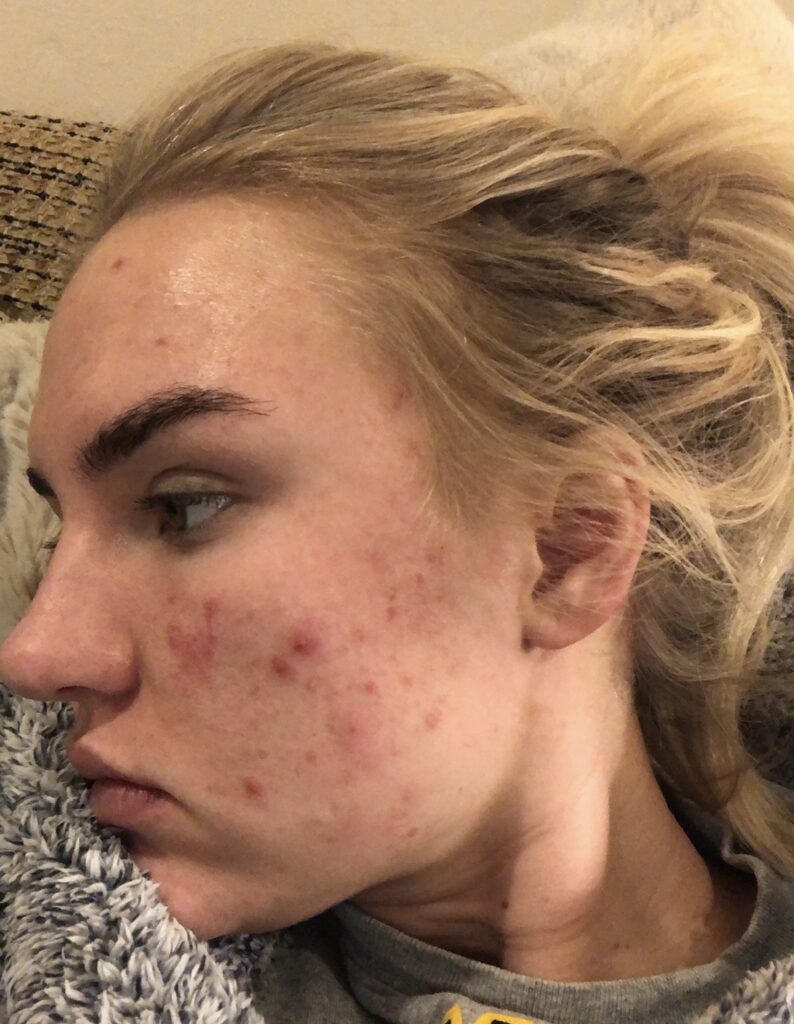
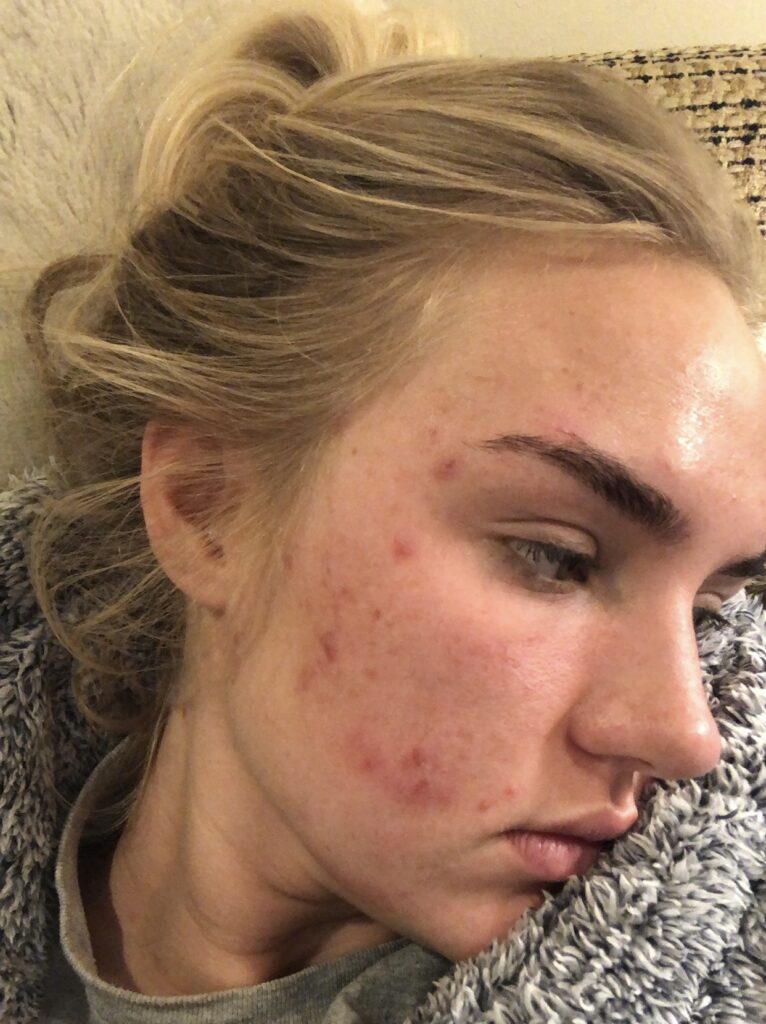
This is my skin after dealing with hormonal acne for over 20 years. I was just like you, wanting the pain to be gone. And I’m (hopefully) going to help you figure out how to alleviate some of your symptoms.
What Causes Hormonal Acne (And Why It Can Feel Impossible to Treat)
One of the biggest misconceptions about hormonal acne is that it’s caused by poor hygiene. If you’ve ever been told to “just wash your face more,” I’m sorry. Hormonal acne starts much deeper than the surface of your skin.
Hormones called androgens, including testosterone, play a major role. Everyone has androgens, but people with conditions like PCOS, now called PMOS, often have higher levels or are more sensitive to their effects. Those hormones tell your oil glands to produce more sebum (your skin’s natural oil).
That extra oil mixes with dead skin cells and can clog your pores. Once a pore is blocked, bacteria that normally live on the skin can multiply inside it, leading to inflammation and the painful, deep cysts that hormonal acne is known for.
This is why hormonal acne tends to show up along the jawline, chin, neck, and lower cheeks. It’s also why it often gets worse around your menstrual cycle or during times of hormonal change.
Because the root cause is happening inside the body, skincare products can only do so much. That’s not to say skincare doesn’t matter; it absolutely does. But even the best cleanser or serum can’t stop your ovaries from producing hormones or change how your skin responds to them.
For many people, treating hormonal acne works best when you address both the root cause and the symptoms.
That might include:
- Supporting hormone balance with the help of your healthcare provider.
- Using prescription or over-the-counter acne treatments.
- Investing in an esthetician who can help find the correct products for your acne-prone skin
- Following a consistent skincare routine.
- Managing inflammation and protecting your skin barrier.
- Adding tools like LED light therapy to help reduce inflammation and support healing.
The important thing to remember is this:
Hormonal acne is not a reflection of how “healthy” you are, how clean your skin is, or how much effort you’re putting in. It’s a medical condition influenced by hormones, inflammation, genetics, and other factors that are often outside your control.
Understanding that difference can take a lot of the shame out of the equation. And once you know what’s actually causing your acne, it becomes much easier to tell the difference between products that sound promising and products that are designed to solve a problem they were never capable of fixing in the first place.
Can an LED Face Mask Actually Help Hormonal Acne?
The short answer? Yes—but probably not for the reason you think.
If you’re hoping an LED face mask will balance your hormones and stop hormonal acne for good, you’ll probably be disappointed. But if you’re looking for a tool that can calm inflammation, help breakouts heal faster, and reduce some of the redness that comes with acne, the research is much more encouraging.
This is an important distinction because it helps set realistic expectations. An LED face mask doesn’t treat the underlying hormonal imbalance that causes PMOS acne. Instead, it works on the skin itself by supporting your body’s natural healing process.
Think of it this way: if your hormones are turning on the faucet that causes breakouts, an LED face mask isn’t turning the faucet off. It’s helping clean up the water that’s already spilled onto the floor.
How LED Light Therapy Works
Not all light is the same. Different wavelengths of light penetrate the skin at different depths and have different effects.
The two types you’ll see most often in LED face masks for acne are red light and blue light.
Red Light
Red light is best known for its anti-inflammatory and healing effects. Research suggests it may help:
- Calm inflammation associated with acne.
- Reduce redness after breakouts.
- Support your skin’s natural healing process.
- Stimulate collagen production, which may improve the appearance of acne scars over time.
While red light won’t stop new hormonal breakouts from forming, it may help your skin recover more quickly once they do.
Blue Light
Blue light works differently. Instead of calming inflammation, it targets Cutibacterium acnes (formerly known as Propionibacterium acnes), the bacterium that contributes to inflammatory acne.
Blue light may help:
- Reduce acne-causing bacteria on the skin.
- Decrease inflammatory pimples.
- Prevent some clogged pores from becoming inflamed.
However, blue light doesn’t change your hormone levels or reduce excess oil production caused by hormones. If your hormones continue triggering new breakouts, blue light can’t stop that process on its own.
What About Near-Infrared Light?
Some higher-end LED face masks also include near-infrared (NIR) light.
Unlike red and blue light, near-infrared light penetrates deeper into the skin. Early research suggests it may help support tissue repair and reduce inflammation, but scientists are still learning exactly how much additional benefit it provides for acne.
Because of that, I wouldn’t choose a mask based solely on whether it includes near-infrared light.
The Biggest Takeaway
This is the part I wish more brands were honest about.
An LED face mask can help improve the appearance and healing of hormonal acne, but it doesn’t treat the hormonal imbalance that’s causing the acne in the first place.
That doesn’t make it a bad investment. It just means it works best as part of a larger treatment plan rather than as a standalone solution.
Here’s what I want you to remember:
- LED light therapy does not balance hormones.
- It can help reduce inflammation and redness.
- It may help pimples heal faster.
- It works best alongside treatments that address the hormonal cause of acne.
- Consistency matters much more than expecting overnight results.
If you’ve been burned by miracle skincare claims before, I hope this feels reassuring. You don’t need another product promising to “fix your hormones.” You deserve honest information about what a product can and can’t do before you spend your money.
What the Research Actually Says
One of the things I care about most is separating “there’s a study on it” from “there’s actually good evidence.” Those aren’t always the same thing.
The good news is that LED light therapy is one of the few skincare devices that has been studied in clinical trials. While we still need more long-term research, the evidence we have is encouraging, especially for inflammatory acne.
Here’s what the research supports—and where the marketing starts to get ahead of the science.
What the Evidence Supports
It can reduce inflammatory acne.
This is one of the strongest findings. Multiple studies have found that red light, blue light, or a combination of the two can reduce inflammatory acne lesions over time.
That means it may help with:
- Painful pimples
- Red, swollen breakouts
- Acne that feels tender or inflamed
It’s important to note that most studies looked at mild to moderate acne, so results may vary if your acne is more severe.
It may help breakouts heal faster.
One reason people notice improvements is that red light appears to support the skin’s natural healing process.
That can mean:
- Less redness after a breakout.
- Faster recovery once a pimple appears.
- Less irritation during the healing process.
If you’ve ever felt like one cyst takes weeks to fully disappear, this is where LED therapy may be helpful.
It can improve skin texture over time.
Red light has also been shown to stimulate collagen production. While collagen won’t prevent hormonal acne, it can help support smoother-looking skin as breakouts heal.
This is one reason some people notice improvements in the appearance of post-acne marks after consistently using an LED mask.
It’s generally considered safe.
One of the biggest advantages of LED light therapy is that it’s non-invasive and generally well-tolerated.
Unlike some acne treatments, it doesn’t typically cause:
- Peeling
- Dryness
- Burning
- Increased sun sensitivity
That doesn’t mean it’s right for everyone, but for many people, it’s a low-risk option to add to an existing routine.
What the Evidence Doesn’t Support
This is where I think some companies overpromise.
An LED face mask is not a cure for hormonal acne.
Current research does not show that LED therapy:
- Balances hormones.
- Lowers testosterone or other androgens.
- Treats PCOS itself.
- Prevents every future breakout.
- Replaces prescription acne medications when those are needed.
If a company claims its LED mask “fixes hormonal acne at the source,” I’d be skeptical. The source of hormonal acne is, as the name suggests, hormonal. An LED mask simply isn’t designed to change what’s happening inside your endocrine system.
What Kind of Results Should You Expect?
This is probably the biggest mismatch between social media and reality.
You might see someone post dramatic before-and-after photos after using an LED mask for a week. While that can happen, it’s not what the research suggests most people should expect.
In clinical studies, participants typically used LED therapy consistently for 8 to 12 weeks before researchers measured meaningful improvements.
That means:
- Results are usually gradual.
- Consistency matters more than intensity.
- Missing a few sessions isn’t a disaster, but using the mask once every couple of weeks probably won’t do much.
Like most evidence-based skincare, this isn’t an overnight fix. It works best when you stick with it.
My Biggest Takeaway
If you’re looking for a science-backed tool to help calm inflammation and support your skin while you’re addressing the hormonal side of acne, I think LED light therapy is a reasonable option.
But if you’re hoping it will replace hormone treatment, prevent every cyst, or completely transform your skin in two weeks, you’re likely setting yourself up for disappointment.
To me, that’s the difference between “worth the hype” and “overhyped”. The science is promising. The marketing often promises much more than the evidence can deliver.
How to Choose an LED Face Mask That’s Actually Worth Your Money
By now, you know that LED light therapy isn’t a miracle cure—but it also isn’t just another wellness gimmick. If you’ve decided an LED face mask is something you’d like to try, the next question becomes: Which one is actually worth buying?
The truth is, there are dozens of LED masks on the market, ranging from under $100 to well over $600. More expensive doesn’t automatically mean better, and more colors don’t necessarily mean more effective.
When I’m evaluating an LED face mask, these are the things I pay attention to.
1. Look for FDA-Cleared Devices
One of the first things I check is whether a device is FDA-cleared.
This doesn’t mean the FDA has “approved” the mask as a miracle treatment. FDA clearance simply means the manufacturer has demonstrated that the device is substantially equivalent to another legally marketed device for its intended use and has met applicable safety and performance requirements.
That gives me much more confidence than buying a device from a brand making bold claims with little transparency.
2. Prioritize the Right Light Wavelengths
Not every LED mask uses the same wavelengths, and that’s important because different wavelengths have been studied for different skin concerns.
For inflammatory acne, I look for masks that include:
- Blue light (around 415 nm) helps target acne-causing bacteria.
- Red light (around 630–633 nm) to help reduce inflammation and support healing.
Some masks also include near-infrared light (around 830 nm), which may provide additional support for skin repair, though more research is still needed to understand its role in treating acne.
3. Comfort Matters More Than You Think
This might sound silly, but if a mask is uncomfortable, heavy, or constantly slides around, you’re probably not going to use it consistently.
And consistency is what the research shows actually matters.
I generally prefer flexible silicone masks over hard plastic designs because they tend to fit more face shapes and feel easier to wear while relaxing, reading, or watching TV.
My Top Recommendations
These are the masks I’d feel comfortable recommending based on the available research, device specifications, and brand transparency.
Best If You Want One Device for Acne and Overall Skin Health
I use both of these masks at home!
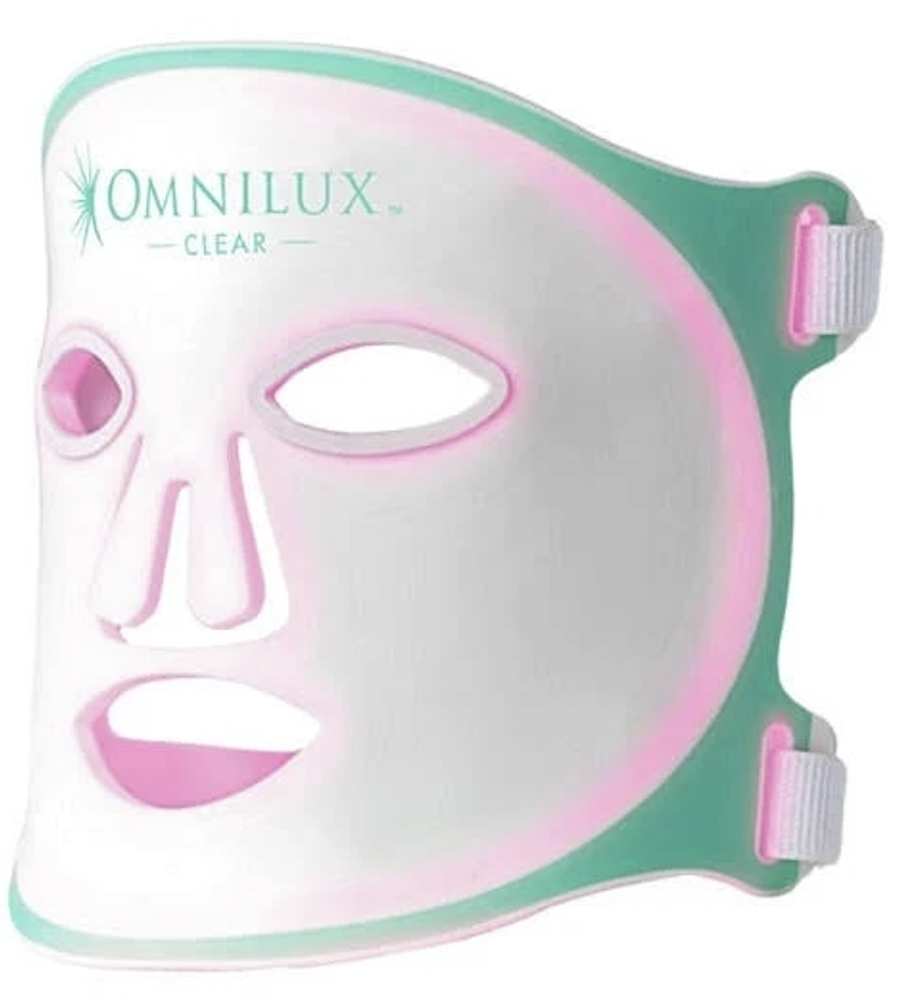
Omnilux Clear LED Acne Mask & CurrentBody Skin Series 2
If you’re dealing with acne but also want to address redness, skin texture, or early signs of aging, this is a strong option. It combines multiple clinically relevant wavelengths in a comfortable silicone design.
Best for People Who Want Both Red and Blue Light in One Device

Dr. Dennis Gross DRx SpectraLite FaceWare Pro
This mask has been a favorite among dermatologists for years because it combines red and blue light therapy and has published clinical data supporting its use. While it’s an investment, it’s a solid option if you want a shorter treatment time and a well-established device.
Best for People on a Budget
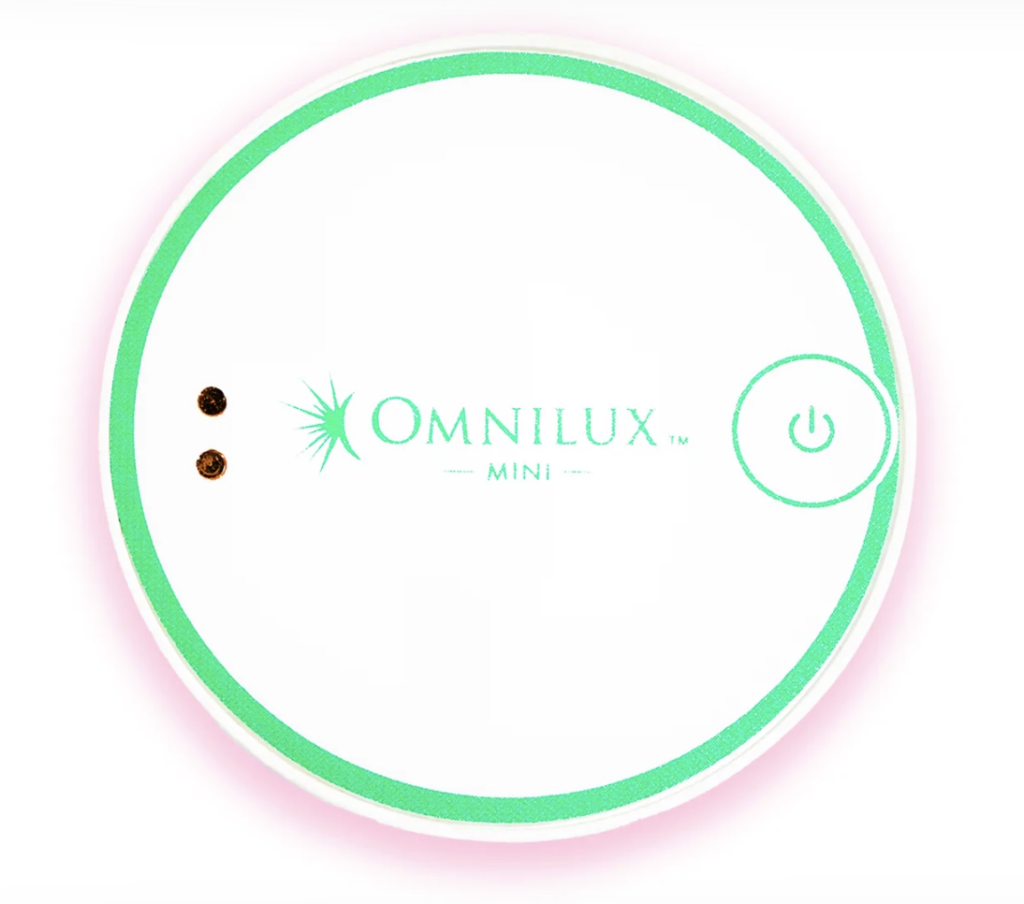
Omnilux Mini Blemish Eraser
I use this when traveling, and it has come in handy every time!
My Promise to You
I know how expensive managing a chronic illness can be. I’ve wasted money on products that overpromised and underdelivered, too. If I recommend something here, it’s because I genuinely believe it has a reasonable amount of evidence behind it—not because it’s trendy. If I don’t think something is worth your money, I’ll tell you that, too.
EXPLORE
Writer, speaker, and creator on a mission is to normalize normal bodies and help women like you feel at home in your own skin.

I'm Mik!
hey love,
Get to know me!
LET’S HIIT IT!








LEAVE A COMMENT